Classic Jung · ET(N) · Mallicknight68/100
Opening note:
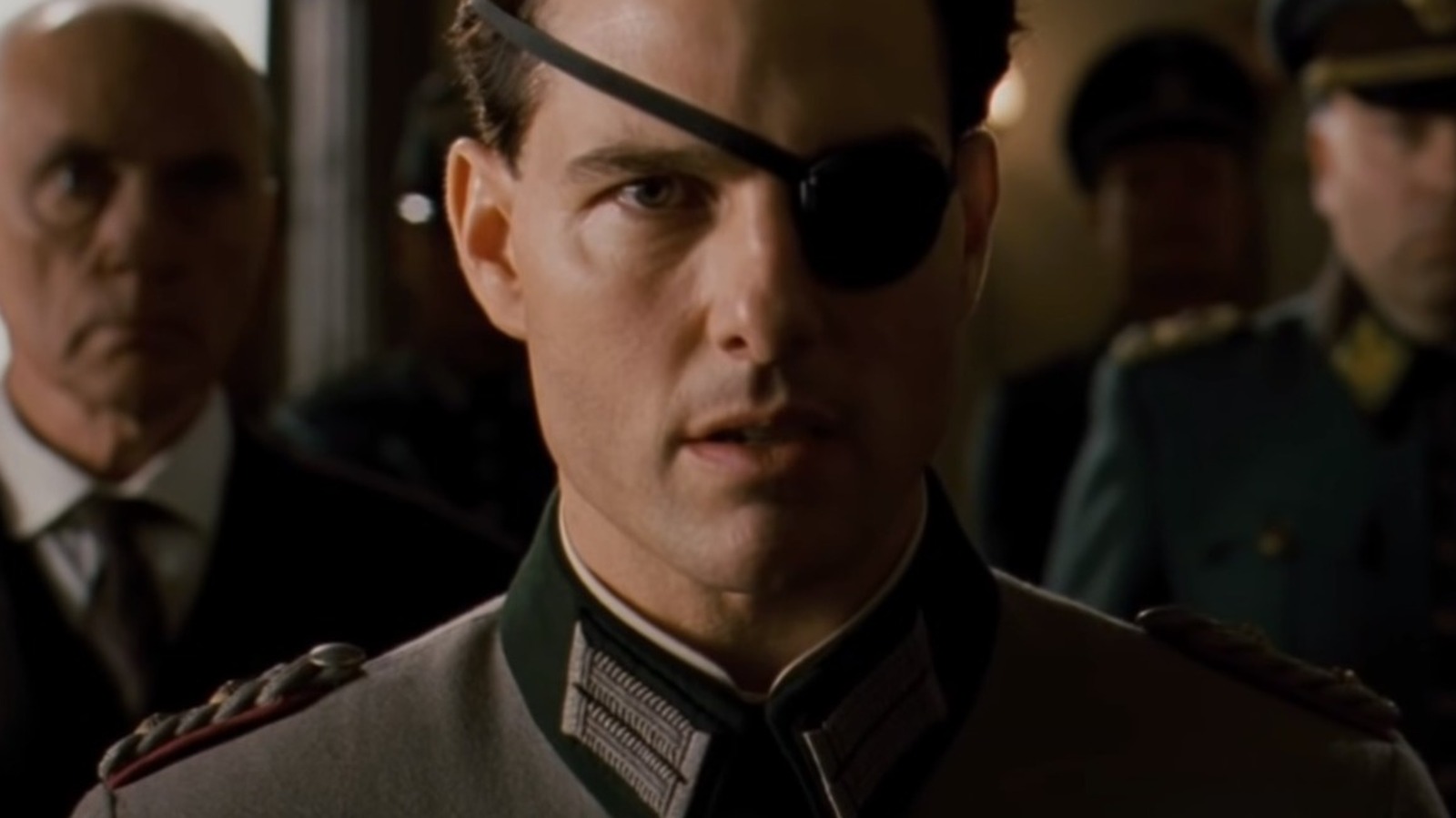
I am going to write a Classic Jung analysis on Colonel Claus von Staffenbaug from Valkyrie (2008), played by Tom Cruise, all rooted in Carl Jung's Psychological Types Chapter X. As per the analysis, he comes closest to ET(N), which is extroverted thinker with auxiliary intuition, otherwise stereotyped for being cold corporate bosses and ruthless CEOs.
Te (dominant function):
Extroverted thinking (Te) is a function that orients around objective logic, while dominant function is the most trusted and used function. This is evident in case of Claus whose utmost display of trust was shown in objectivity of logical systems. Whole coup was based on existing protocols in Nazi Army, and how to use them to prodice certain effects without breaking a logical chain. For instance, the use of telephone and disconnecting then at signal's department while calling standby Army to take control of the coup. This is very different from Ti which makes subjective interpretations than being based in proven objective concepts. He organizes the evident protocols in a way to systenatically work in his objective's favour.
Ni (auxiliary function):
Introverted intuition (Ni) is a function concerned with subjective unconscious images rising within the subject, while auxiliary function supports the dominant function without replacing it. This is seen in Claus through his way of understanding certain situations which guides his Te. The initial part of the movie we see his understanding the pattern of where German economy is leading through the WW2 and Hitler's leadership. He wasn't sitting with some figures or statistics, it was a mere perception of latent connections he made. Again it was subjective (Ni), not objective (Ne), being his personal perception and not something embedded in reality of external world.
Se (tertiary function):
Extroverted sensing (Se) is a function that orients around objective factor of sensation, while tertiary function is less differentiated function consciously than auxiliary and dominant, while being more conscious than inferior function. So we can see just a few glimpse of it than a continuous usage. Some of the times we could notice how Claus uses the sensory properties while selecting correct tools for making impactful blast, use of force in certain situations, like post blast. But these are seen very less because of the very nature of tertiary functions, which are unreliable and seen very less in an individual.
Fi (inferior function):
Introverted feeling (Fi) is a function concerned with subjective values, while inferior functions are least differentiated function polluted with contents of the unconscious, often brittle if shown. One thing the movie puts emphasis on is Claus' relation with his family. Fi deals with subjective values, and very commonly the most vulnerable part in this is the family. Not because Fi is selfish, but because families are associated with subjective values, not objective social values. The priority assigned to bringing down Nazi regime resulted in a neglect of subjective values, the family, and the consequences. His commute with family was as much as making sure they escape safely after Claus and other conspiring officers are caught, not about the emotional consequences of it on his family or even himself.
Counter-argument against ET(S):
It is very easy to misunderstand Claus as ET(S) as both are extroverted thinkers, but with differing auxiliary functions. Ni in ET(N) guides their objective ubderstanding of systems with a subjective trajectory or pattern recognition while not being rooted in objectivity of the external world, and that is how Claus recognized whom to trust and where German economy draining from war expenditure is leading towards from very little of clues. While ET(S) with introverted sensing auxiliary would rely heavily how their bodily sensation are, grounded more in immediate reality and known subjects, than perception of inevitability.
Counter-argument against IN(T):
A strong alternative, but assumes that Claus leads with Ni. As per what Jung said, an IN(T) or IN(F) will feel pulled towards a vision, which appears similar to Clause on the surface. But looking at what he trusts the most, it would be Te. Because otherwise we would expect to see more Ni display than mere some supporting perceptions to Te. His leading decisive factor was whether something is logically objective or not, very specifically in form of established emergency protocols and internal military hierarchies whose full leverage was taken. So IN(T) would be more of a stereotype for visionary person than the actual functional blueprints of him.
Counter-argument for IT(S):
This is a commonly believed type for many people who are hierarchical, disciplined, and are strong willed. But its all result of stereotypes than actual attributes. Any introverted thinker whether IT(S) ir IT(N) believes most in forming subjective logical interpretations for their observations, whils Claus was using what's objective and already established by evidence to form a larger system that produces certain outcomes. This distinguishes ET(N) from IT(S). We never saw Claus making custom theory related to anything. More than that, it was about sticking to what's proven and objective, like the protocols he took advantage of.