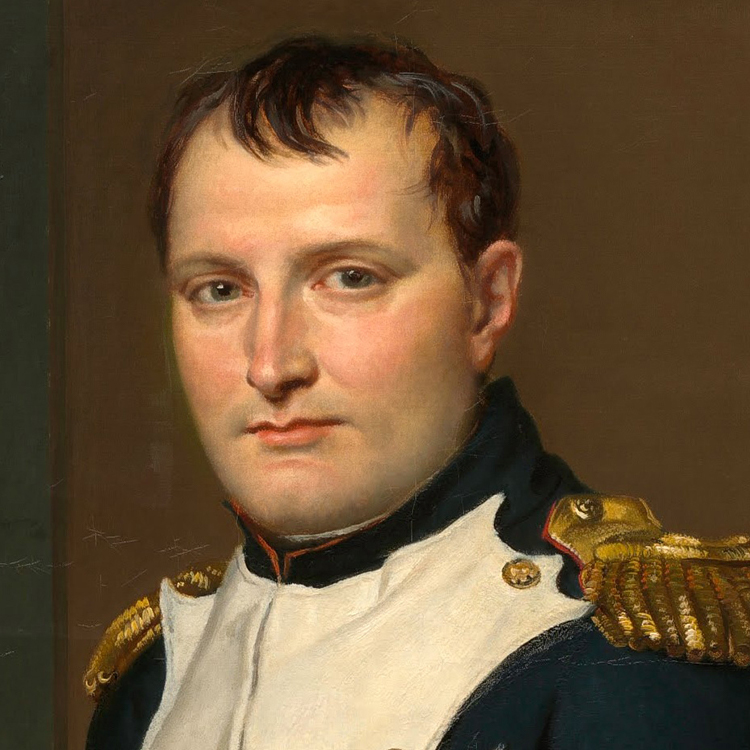
Classic Jung · ET(N) · dipayandas90/100
Napoleon Bonaparte is often typed as ENTJ in modern MBTI discussions, although ESTJ, INTJ, and ENTP have also been proposed depending on which aspects of his personality and career are emphasized. When examined through the framework of Carl Jung’s Chapter X of Psychological Types, ENTJ provides a strong four-letter MBTI equivalent, particularly because of Napoleon’s extraordinary external organization, strategic ambition, decisiveness, and ability to transform abstract objectives into concrete political and military structures. However, Jung did not use the MBTI system, and Napoleon cannot be typed with certainty from historical records. This analysis is therefore a retrospective interpretation of his documented behavior rather than a definitive psychological classification.
The dominant function associated with the modern ENTJ type is Extraverted Thinking (Te). Jung described the extraverted thinking type as someone whose psychological activity is directed toward objective circumstances, organization, efficiency, and the implementation of rational principles in the external world. Napoleon strongly reflects this orientation. His career was characterized by an extraordinary desire to organize institutions, armies, territories, and political systems according to his objectives. He did not merely possess ambitions; he repeatedly converted those ambitions into concrete structures.
Napoleon’s military career provides some of the clearest evidence of Extraverted Thinking. He approached warfare as a problem requiring organization, timing, logistics, concentration of forces, and decisive execution. He was capable of rapidly assessing battlefield conditions and reorganizing his forces to exploit opportunities. His campaigns demonstrate a strong preference for practical effectiveness rather than adherence to tradition for its own sake. Napoleon frequently abandoned established methods when circumstances demanded innovation, demonstrating that his relationship with systems was instrumental rather than merely conservative.
His political career further reinforces the Te interpretation. As First Consul and later Emperor, Napoleon introduced major administrative and legal reforms, reorganized governmental institutions, centralized authority, and established systems intended to create greater consistency throughout the territories under his control. The Napoleonic Code is particularly significant because it demonstrates his interest in translating political principles into a durable institutional framework. His approach was fundamentally organizational: society was something that could be structured, standardized, and administered.
The auxiliary function associated with ENTJ is Introverted Intuition (Ni). Jung described introverted intuition as an inward perception of possibilities, underlying patterns, and future developments. Napoleon demonstrated a powerful ability to perceive political and military opportunities before they became obvious to others. His ambitions extended far beyond individual battles. He developed a broad vision of French power and attempted to reshape the European political order around that vision.
Napoleon’s strategic thinking frequently involved anticipating how several events would interact over time. He could identify opportunities created by divisions among opposing powers and exploit rapidly changing political circumstances. His ability to understand the broader consequences of military and diplomatic developments allowed him to operate on a scale much larger than the immediate battlefield.
The combination of Te and Ni is particularly useful for understanding Napoleon. His intuition generated large-scale possibilities, while his Extraverted Thinking attempted to implement those possibilities through concrete institutions, armies, and policies. He was therefore not simply a dreamer or strategist. He possessed an unusually strong drive to transform his vision into observable reality.
The tertiary function associated with ENTJ is Extraverted Sensing (Se). Jung described extraverted sensation as direct awareness of concrete reality and responsiveness to immediate circumstances. Napoleon demonstrated considerable sensory engagement with his environment, especially through his military leadership. He was highly attentive to terrain, troop positions, timing, weather, movement, and battlefield conditions. His strategic plans could be altered rapidly when immediate circumstances changed.
This function also helps explain his appetite for action. Napoleon was not a leader who preferred to remain permanently detached from events. He frequently placed himself close to military operations and exercised direct influence over unfolding situations. His ability to make rapid decisions under pressure demonstrates strong engagement with the immediate environment.
The inferior function associated with ENTJ is Introverted Feeling (Fi). Jung regarded the inferior function as the least conscious and least naturally developed aspect of a personality. For an ENTJ interpretation, Introverted Feeling concerns private personal values, subjective emotional convictions, and recognition of individual emotional experience. Napoleon was capable of intense personal attachments, but his public decisions frequently subordinated personal emotions to political and strategic objectives.
His relationships demonstrate this complexity. He experienced strong romantic and familial attachments, yet he was also willing to make decisions that damaged or sacrificed personal relationships when he believed political circumstances required it. His sense of identity was strongly connected to achievement, authority, France, and historical significance. Individual emotional considerations were often secondary to his larger objectives.
An unhealthy expression of inferior Introverted Feeling can also involve an intense concern with personal significance and legacy. Napoleon's later preoccupation with his reputation and historical position can be interpreted through this lens. He wanted his achievements to possess lasting meaning, and his self-conception became increasingly connected to the image of himself as an extraordinary historical figure.
Some typologists classify Napoleon as INTJ because of his strategic intelligence, independence, and long-term vision. This interpretation has merit, especially when focusing on his military planning. However, Napoleon's psychological energy was strongly directed outward. He sought to command organizations, reshape institutions, influence governments, and personally direct enormous political and military systems. His ideas were consistently translated into external action. This makes dominant Extraverted Thinking a stronger interpretation than dominant Introverted Intuition.
Others classify Napoleon as ESTJ because of his administrative ability, discipline, and practical leadership. The ESTJ interpretation emphasizes his organizational competence and attention to concrete realities. However, Napoleon's historical behavior also demonstrates a remarkable willingness to pursue possibilities that were not immediately established by precedent. His ambitions involved transforming the political structure of Europe rather than simply preserving existing institutions. His long-range strategic vision therefore makes auxiliary Introverted Intuition a plausible component of his personality.
ENTP is another possible interpretation because of Napoleon's adaptability and intellectual flexibility. Yet his personality was substantially more goal-directed and organizational than exploratory. He did not generate possibilities primarily for intellectual experimentation. He generally used alternative possibilities to advance a defined strategic objective. This again favors the Te-Ni structure associated with ENTJ.
Viewed through the framework of Chapter X of Psychological Types, Napoleon Bonaparte most plausibly corresponds to the modern MBTI type ENTJ. His extraordinary capacity to organize external reality reflects dominant Extraverted Thinking, his large-scale strategic vision demonstrates auxiliary Introverted Intuition, his responsiveness to immediate military and political circumstances corresponds to tertiary Extraverted Sensing, and his comparatively private and subordinated emotional values are consistent with inferior Introverted Feeling. Although historical figures cannot be typed with absolute certainty, ENTJ provides a coherent interpretation of Napoleon’s ambition, organizational ability, strategic vision, decisiveness, and drive to transform his environment according to his objectives within the broader framework of Jung’s Psychological Types.