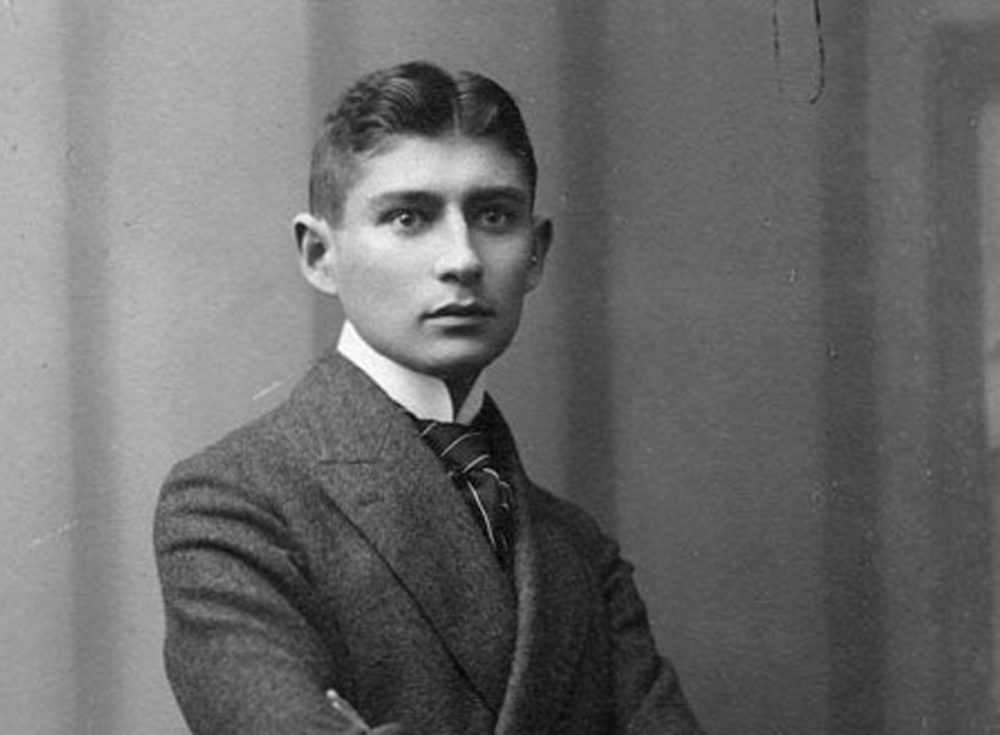
Classic Jung · IN(F) · Kakashi80/100
Franz Kafka is best understood as an **INFJ** within the framework established by Carl Jung in Chapter X of *Psychological Types*. In Jungian terms, this corresponds to the **introverted intuitive type** with auxiliary feeling. His literary works, diaries, correspondence, and personal life consistently reveal a personality primarily directed toward inner symbolic perception rather than external adaptation. Kafka's enduring fascination with alienation, existential anxiety, invisible systems of authority, and the unconscious dimensions of human existence reflects the psychological orientation Jung attributed to dominant introverted intuition. As with all historical figures, this analysis remains an interpretive application of Jung's theory rather than a definitive conclusion.
The defining feature of Kafka's psychology is dominant **introverted intuition**. Jung described this type as one whose consciousness is directed toward internal images, unconscious archetypes, and symbolic meanings instead of objective external reality. Rather than recording the world as it appears, the introverted intuitive perceives hidden patterns and psychological realities underlying ordinary experience. Kafka's fiction consistently embodies this orientation. Works such as *The Trial*, *The Castle*, and *The Metamorphosis* present realities governed less by physical laws than by symbolic and psychological structures. The events themselves frequently function as manifestations of internal states, expressing truths that cannot easily be reduced to literal interpretation.
Jung observed that introverted intuition often produces visions that appear detached from ordinary experience yet possess remarkable psychological depth. Kafka's narratives rarely focus on external adventure or practical conflict. Instead, they immerse readers in dreamlike environments where authority, guilt, identity, and isolation assume symbolic significance. His imagination naturally gravitates toward abstract psychological themes rather than concrete descriptions of everyday life. This inward orientation reflects intuition functioning as the dominant mode of perception.
His auxiliary **feeling** function shapes how these intuitive insights are evaluated. Kafka's writing demonstrates extraordinary sensitivity toward human suffering, vulnerability, moral uncertainty, and interpersonal alienation. Rather than analyzing characters through detached logic, he portrays their emotional and existential conditions with profound empathy. His personal letters and diaries likewise reveal an individual intensely concerned with authenticity, personal relationships, ethical responsibility, and emotional sincerity. Feeling therefore appears to support intuition by determining the personal and human significance of the symbolic realities he perceives.
Thinking occupies a comparatively less differentiated position. Kafka undoubtedly possessed considerable intellectual ability, yet his work seldom emphasizes systematic philosophical argument or objective conceptual organization. Instead, logical structures generally serve the expression of deeper intuitive themes. Bureaucratic systems, legal procedures, and institutional mechanisms within his fiction function less as realistic analyses than as symbolic representations of psychological and existential conditions. This suggests thinking is employed instrumentally in support of intuition rather than operating independently as the dominant psychological function.
Sensation appears to occupy the inferior position. Jung noted that inferior sensation in intuitive personalities often results in limited psychological investment in immediate physical reality. Kafka showed relatively little interest in material achievement, sensory indulgence, or practical engagement with the external world. His attention consistently returned to subjective experience, symbolic meaning, and internal conflict. Even his descriptions of physical settings frequently emphasize atmosphere and psychological resonance rather than concrete sensory detail. External reality primarily serves as a vehicle through which deeper intuitive insights are expressed.
Kafka's creative process further reinforces this interpretation. Jung described introverted intuition as drawing upon unconscious imagery that frequently appears mysterious even to the individual experiencing it. Kafka himself often struggled to explain the origins or meanings of his own stories, treating them as discoveries rather than deliberate constructions. This accords closely with Jung's description of intuitive images emerging spontaneously from the unconscious and presenting themselves to consciousness as symbolic realities.
Another characteristic of Jung's introverted intuitive type is psychological independence from conventional expectations. Kafka displayed little interest in achieving public recognition during his lifetime and even requested that many of his unpublished manuscripts be destroyed after his death. Such behavior reflects a personality motivated primarily by internal necessity rather than external validation. His literary work appears driven by the need to articulate inner psychological truths instead of seeking popularity or social influence.
Jung also observed that dominant introverted intuition may produce individuals who appear withdrawn because their principal engagement occurs within their symbolic inner world. Kafka's reserved temperament, preference for solitude, and introspective habits correspond closely to this description. His relationships were often marked by hesitation and self-reflection rather than assertive social engagement, further supporting an introverted orientation.
The limitations of this type are equally apparent. An intense focus on unconscious imagery can produce feelings of detachment from ordinary life, difficulty translating vision into practical action, and persistent existential uncertainty. Kafka frequently described experiences of anxiety, self-doubt, and alienation that accompanied his inward psychological orientation. These struggles illustrate the challenges Jung associated with a consciousness predominantly directed toward symbolic perception rather than practical adaptation.
Overall, Franz Kafka most closely aligns with Jung's description of the **introverted intuitive type**. Using modern four-letter notation, this is best represented as **INFJ**. His lifelong orientation toward symbolic meaning, profound introspection, psychological imagination, moral sensitivity, and inward exploration reflects dominant introverted intuition supported by feeling, while thinking and sensation remain comparatively less differentiated. Although no typological assessment can fully encompass the complexity of Kafka's personality, the INFJ interpretation provides the most coherent explanation of his characteristic motivations, creative vision, and psychological orientation within the framework established by Jung in Chapter X of *Psychological Types*.