Classic Jung · IF(S) · dipayandas82/100
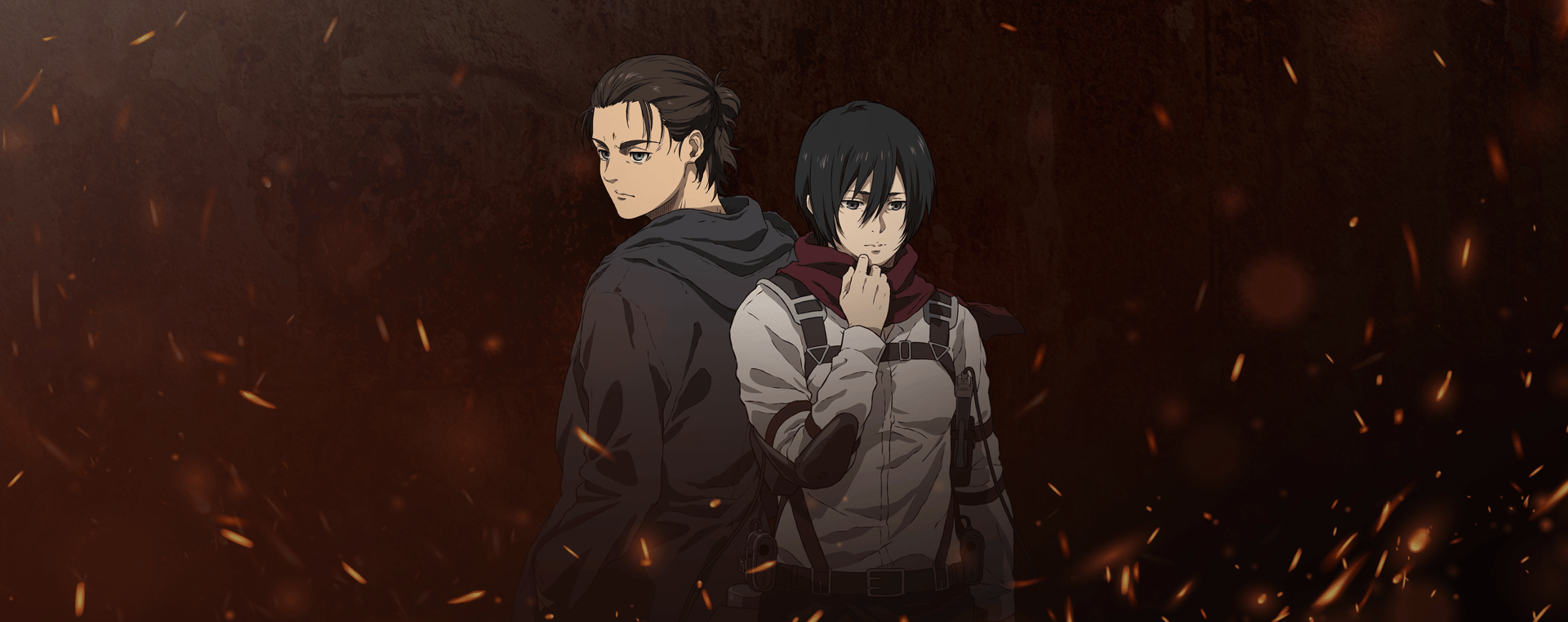
Eren Yeager from Attack on Titan is most commonly typed as ISFP or INTJ in modern MBTI discussions, depending on which period of his character development is examined. However, when analyzed through the framework of Carl Jung’s Chapter X of Psychological Types, the ISFP interpretation provides a particularly strong four-letter MBTI equivalent. Eren’s personality is characterized by an intensely personal value system, a powerful desire for freedom, direct engagement with reality, and increasingly profound internal visions of the future. Because Eren is a fictional character and Jung never analyzed him, this classification is an interpretive comparison between Jungian psychological functions and Eren’s behavior throughout Attack on Titan.
The dominant function associated with the modern ISFP type is Introverted Feeling (Fi). Jung described the introverted feeling type as someone whose judgments originate from deeply personal values and subjective convictions rather than from external social standards. Such individuals may appear quiet or emotionally restrained, yet their internal values can be exceptionally intense. Eren strongly demonstrates this characteristic through his uncompromising conception of freedom. His desire to live freely is not merely a political preference or abstract philosophy. It becomes the central personal value around which his identity is constructed.
From childhood, Eren reacts intensely against anything that restricts human freedom. The Walls represent more than physical barriers to him; they symbolize the confinement of humanity. His anger toward the Titans originates partly from the belief that people have been deprived of the freedom to live beyond predetermined boundaries. This deeply personal reaction distinguishes Eren from characters who approach the conflict primarily through duty, strategic calculation, or institutional responsibility. His decisions are repeatedly driven by what he personally believes freedom should mean.
Jung emphasized that introverted feeling can become extremely powerful when an individual encounters circumstances that violate deeply held values. Eren demonstrates this throughout his life. The destruction of his hometown, the death of his mother, the suffering of his comrades, and the revelation of humanity beyond the Walls progressively intensify his internal convictions. His response is rarely simple obedience to an established moral system. Instead, he repeatedly asks whether the world itself is acceptable according to his own understanding of freedom and justice.
The auxiliary function of ISFP is Extraverted Sensing (Se). Jung described extraverted sensation as direct engagement with concrete reality and an ability to respond rapidly to immediate circumstances. Eren possesses an exceptionally action-oriented personality. He is rarely satisfied with merely discussing a problem. When confronted with danger, he wants to act immediately. His combat development demonstrates this characteristic clearly. Eren learns through direct experience, physical confrontation, and repeated exposure to increasingly difficult circumstances.
His Titan abilities further emphasize the importance of immediate action. Eren frequently responds instinctively when confronted with threats, relying on physical courage and adaptability. Even before becoming a Titan, he repeatedly places himself in dangerous situations because remaining passive feels psychologically intolerable. His relationship with reality is therefore intensely experiential. He wants to experience freedom directly rather than merely imagine it.
Extraverted Sensing also explains Eren’s tendency toward confrontation. He often responds to obstacles by physically challenging them rather than patiently accepting them. This quality can make him impulsive, but it also provides the determination necessary for survival. His willingness to act when others hesitate becomes one of his defining strengths.
The tertiary function of ISFP is Introverted Intuition (Ni). Jung described introverted intuition as a perception of hidden meanings, future possibilities, and underlying developments that are not immediately visible. In Eren, this function becomes increasingly significant as the story progresses. His understanding of the future, the Paths, and the consequences of his choices introduces a powerful intuitive dimension into his personality.
Unlike his younger self, who primarily reacts to immediate circumstances, the later Eren becomes increasingly concerned with what events will eventually lead to. His experiences with the Attack Titan and the Founding Titan transform his understanding of time and causality. He begins perceiving future events and recognizing connections between past, present, and future that other characters cannot see. This development represents an increasingly powerful role for Introverted Intuition.
However, Ni does not appear to replace Eren’s personal values. Instead, his visions of the future become interpreted through his central desire for freedom. He does not simply observe possible futures; he evaluates them according to what he believes he must do. This combination of personal values and internal vision is consistent with Fi supported by Ni.
The inferior function of ISFP is Extraverted Thinking (Te). Jung regarded the inferior function as the least conscious and least naturally developed psychological function. For an ISFP, Te concerns external organization, objective efficiency, and systematic control. Eren demonstrates significant tension with this function. He is capable of planning and strategic manipulation, particularly in his later years, but systematic organization is not his natural starting point. His strategies generally exist to serve deeply personal objectives rather than efficiency for its own sake.
The later Eren does become remarkably calculating. He manipulates events, withholds information, and coordinates circumstances to reach a desired outcome. Nevertheless, these actions often appear emotionally and personally motivated rather than detached and organizational. His strategic abilities therefore represent a development of Te rather than evidence that Te is his dominant function.
Some viewers type Eren as INTJ because of his later strategic behavior and extensive knowledge of future events. This interpretation becomes understandable when focusing exclusively on his post-timeskip personality. However, Jungian typing requires consideration of the underlying psychological orientation rather than simply the character's most sophisticated abilities. Eren's strategies are ultimately subordinate to his personal conception of freedom. He does not seek control because organization itself fascinates him; he seeks control because he believes it is necessary to pursue his deeply held values.
Others identify Eren as an INFP because of his idealism and intense personal convictions. However, Eren is considerably more action-oriented and physically engaged with his environment than the typical dominant Introverted Feeling and auxiliary Extraverted Intuition pattern. His personality consistently emphasizes direct confrontation, immediate action, and concrete experience. His intuitive abilities become important later, but his fundamental relationship with the world remains strongly experiential.
Viewed through the framework of Chapter X of Psychological Types, Eren Yeager most plausibly corresponds to the modern MBTI type ISFP. His uncompromising internal conception of freedom reflects dominant Introverted Feeling, his aggressive engagement with immediate reality demonstrates auxiliary Extraverted Sensing, his increasingly powerful perception of hidden and future developments aligns with tertiary Introverted Intuition, and his gradual development of strategic external control reflects inferior Extraverted Thinking. Although Eren's personality changes dramatically throughout Attack on Titan and fictional characters cannot be typed with absolute certainty, ISFP provides a coherent explanation of the values, motivations, actions, and psychological evolution underlying his character according to Carl Jung's original theory presented in Chapter X of Psychological Types.