Classic Jung · ET(S) · dipayandas83/100
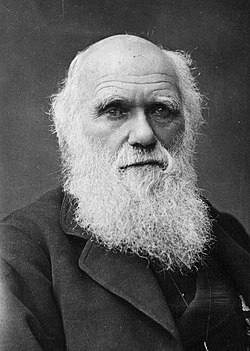
Charles Darwin is best approximated as ESTJ when Jung's description in Chapter X of Psychological Types is translated into the later four-letter MBTI framework. The important point is that this is not merely an inference from Darwin being a scientist or from his empirical working style. Jung explicitly names Darwin as an example of the normal extraverted thinking type, contrasting him with Kant as an example of the introverted thinking type. Jung summarizes the distinction very clearly: Darwin "speaks with facts," whereas Kant relies on the subjective factor.
That explicit identification gives us the strongest foundation for the first three letters. Darwin's dominant orientation is extraverted thinking, meaning his judgments are fundamentally oriented toward objective reality and externally verifiable evidence. Jung explains that extraverted thinking is determined by objective data and that its criterion comes from external conditions, whether these appear as perceptible facts or generally accepted objective ideas. Darwin's entire intellectual method fits this orientation remarkably well.
Darwin did not begin with a purely subjective philosophical system and then attempt to force nature into it. His conclusions developed through an enormous accumulation of observations, specimens, geographical information, correspondence, breeding experiments, and comparative evidence. The direction of his thinking repeatedly returned to the object. He observed variations in organisms, compared them, collected evidence from different environments, and gradually constructed broader explanations from the empirical material.
This is precisely the kind of thinking Jung describes when he says that extraverted thinking is productive and synthetic. It does not merely analyze an isolated fact; it creates a new combination from disparate empirical material. Darwin's theory of natural selection is a particularly strong illustration of this process. Numerous observations that initially appear unrelated become integrated into a larger explanatory conception concerning variation, competition, inheritance, adaptation, and survival.
This also explains why Darwin should not automatically be typed as an introverted thinking type simply because he was deeply analytical. Jung explicitly contrasts Darwin with Kant in this respect. The introverted thinker develops ideas from a subjective foundation and moves inward toward conceptual intensity, whereas Darwin's intellectual activity ranged across "the wide field of objective reality." The distinction is therefore not intelligence versus intuition or logic versus emotion. It is the direction from which the thinking derives its authority.
The J in the four-letter approximation follows naturally from the dominance of thinking. In modern MBTI terminology, a rational judging function is associated with the outwardly directed judging orientation in an extraverted type. Jung himself does not use the later J/P terminology, so the translation should not be treated as a literal equivalence. Nevertheless, if we are attempting to map his functional descriptions onto four letters, an extraverted thinking dominant corresponds most naturally to an ETJ structure.
The more difficult question is whether Darwin should be ESTJ or ENTJ. Here I would favor ESTJ, although with considerably more caution than the E-T-J conclusion. Jung's description emphasizes Darwin's direct engagement with objective reality and empirical material. He specifically states that practical thinking in the scientific investigator is an obvious example of outer-directed thinking. Darwin's scientific method was fundamentally grounded in observation and concrete evidence.
This does not mean Darwin lacked intuition. His ability to connect enormous quantities of observations into a general theory obviously required abstraction and conceptual synthesis. But Jung's model does not require an extraverted thinking type to lack intuition. In fact, Jung explains that a dominant function is normally accompanied by an auxiliary function that is different from the dominant one. He gives practical thinking allied with sensation as one example of such a combination.
This provides a useful way to understand Darwin's personality without confusing his creativity with dominant intuition. His originality emerged through his relationship with empirical reality. He accumulated observations first and progressively organized them into a broader explanatory structure. The theory did not replace his attention to evidence; it depended upon it. His thinking remained anchored to the external world.
This is also why I would hesitate to type Darwin as ENTP under the Chapter X framework. Jung's extraverted intuitive type is characterized by a continual search for new possibilities. Such a person can become intensely absorbed in one possibility and then abandon it when its potential is exhausted, constantly moving toward the next opportunity. Darwin's scientific work does not resemble this pattern as closely. His intellectual life was characterized by prolonged investigation, accumulation, comparison, verification, and synthesis rather than continual abandonment of possibilities.
Ultimately, ESTJ is the most defensible four-letter approximation of Darwin based specifically on Chapter X. Jung himself provides the essential classification by presenting Darwin as the normal extraverted thinking type. The S component is a cautious modern translation of Darwin's unusually strong orientation toward empirical observation and concrete objective reality, while the T and J components follow from the dominance of extraverted thinking. Darwin's greatness, therefore, should not be interpreted as evidence against ESTJ simply because his work was extraordinarily innovative. His innovation came through disciplined engagement with objective reality, transforming a vast body of empirical material into one of the most consequential explanatory systems in modern science.